March 31, 2026
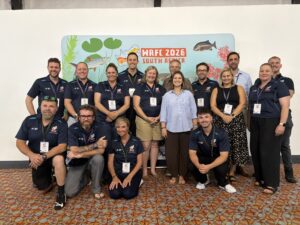
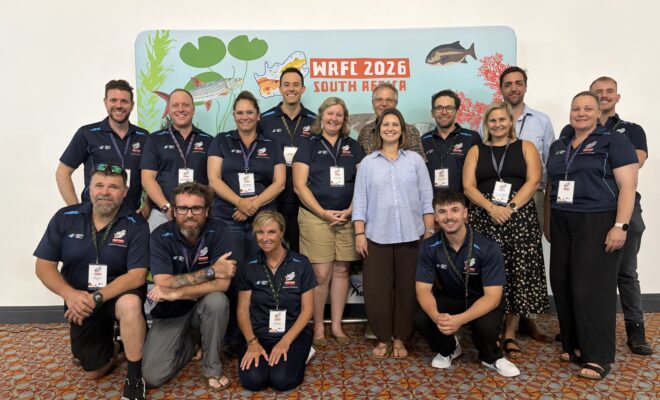
Photo: The Australian Delegation who attended the 11th World Recreational Fishing Conference in South Africa
By Anthony McGrath, VRFish Executive Officer
The World Recreational Fishing Conference (WRFC) is an internationally renowned gathering of the best and brightest minds in recreational fishing. Held every three years or so, the WRFC brings together fisheries managers, scientists, advocates and operators from every corner of the world to share knowledge and ideas with the goal of improving recreational fisheries globally.
In February 2026, the 11th WRFC was held at Mpekweni Beach Resort, Eastern Cape, South Africa, with the theme ‘Sharing global experiences to promote resilient recreational fisheries‘. As usual, Australia is a strong supporter of the WRFC and I was fortunate to be selected as one of our delegates. Previously, the WRFC has been shared around the world, including recent host cities of Melbourne, Rotterdam, Vancouver, São Paulo, Berlin, Norway, Darwin and Dublin.
This year an Australian delegation made up of 16 current and emerging leaders from across Australia received a financial bursary from Fisheries Research and Development Corporation (FRDC) and their regional peak bodies, to attend the event which was hosted by Rhodes University. As the Executive Officer of VRFish, I was selected as one of four Victorian’s to attend, which is the third WRFC I have participated in, each time in a different capacity. The first WRFC I attended was in São Paulo, Brazil in 2014 when I was a Young Future Leader. At that conference I established a valuable network of colleagues around the world and brought home so many new ideas based on what was happening in other countries. In 2023, I attended the WRFC in Melbourne whilst working for the Victorian Fisheries Authority (VFA). In this example, I was helping to organise and deliver the event and as such, found myself assisting many of the world’s young scientists to network with our Victorian professionals and volunteers, as well as navigating the Melbourne night life.
This year over 75 countries were represented in South Africa. For the first time, many were attending from African countries who have vast but developing recreational fishing opportunities and an array of issues not normally experienced in many modern managed fisheries. An example of this is South Africa’s “sustenance fishery”, which is part way between commercial fishing and recreational fishing. Eastern Cape experiences roughly 40% unemployment, so fishing and hunting is utilised as a legitimate way to feed your local community, essentially ‘fishing for survival’. Sustenance fishing is unregulated and unmanaged, but socially acceptable.
The true spirit of the WRFC is in the knowledge sharing, particularly when an attendee can meet with a presenter or expert from another country and have an in-depth discussion about work they are currently undertaking, which has already been undertaken in another part of the world with similar issues. These discussions lead to lifelong career networks which prove invaluable and that is visible throughout the conference. One example was keynote speaker Nelly Kadagi from Kenya, who attended the 2011 WRFC in Berlin as a student. There she met with Julian Pepperell and has since become one of the worlds leading experts on Billfish, despite growing up more that 40 hours by bus from the ocean.
For me there were many highlights to this conference (and one very low light following a delicious but undercooked chicken taco). These include building relationships with other peak bodies from Australia and working on developing ideas with Canadian and American researchers, but there were three presentations that stand out.
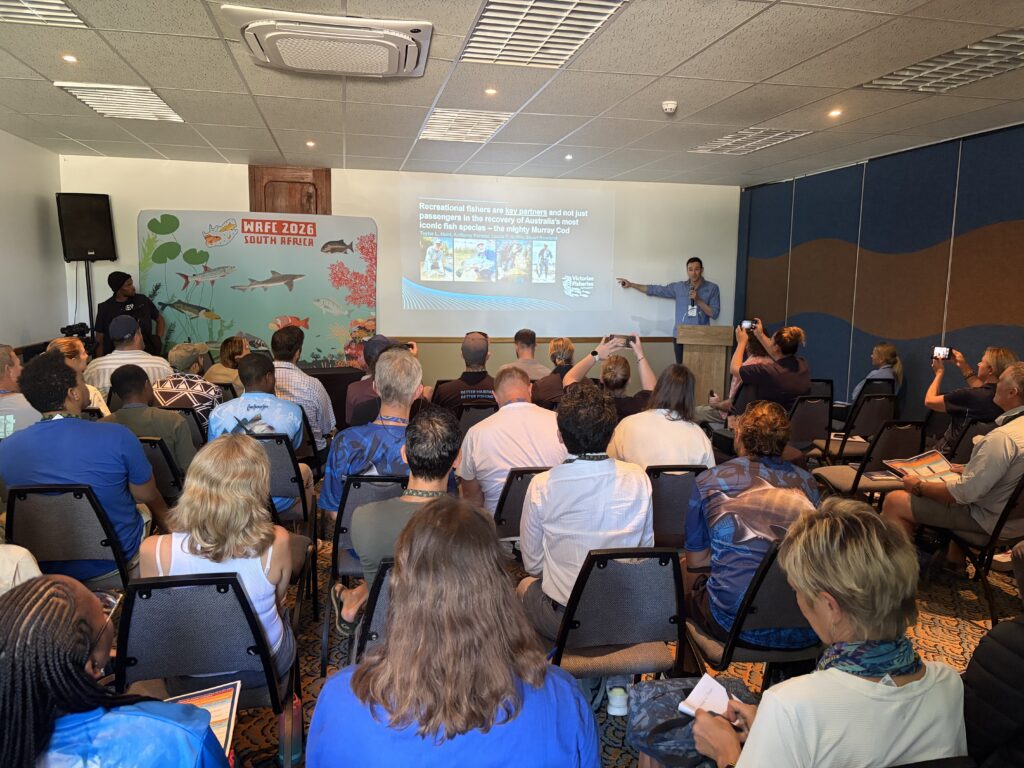
Firstly, I felt proud to watch Dr Taylor Hunt from the VFA present to a room filled beyond its capacity, on the topic; “Recreational fishers are key partners and not just passengers in the recovery of Australia’s most iconic species – the mighty Murray Cod.” In this presentation, Taylor paid tribute to the efforts of recreational fishers in bringing back Murray Cod in Victoria and the role that fishers from all over the Murray-Darling Basin have played in lobbying government, driving management changes, repairing the environment, driving irrigation flow regime change and building the native fish hatchery to rebuild the populations. He also discussed the social changes that have taken place within this fishery including the ‘Care for Cod’ movement and how 120cm+ fish have gone from being as rare as a unicorn hair, to become the benchmark for avid anglers.
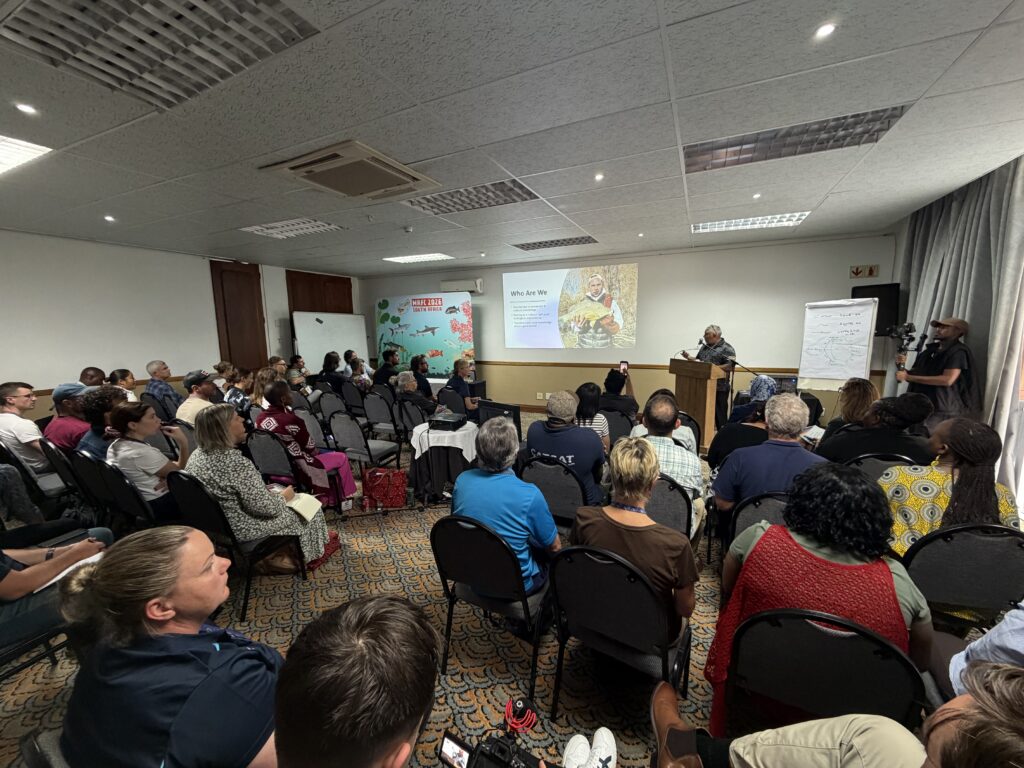
Secondly, I was lucky enough to see Corey Walker from Shepparton fill the room with delegates from at least 20 countries to hear his presentation titled; “Ancient waters; living knowledge strengthening recreational fishing through indigenous cultural practise and community leadership.” In this presentation Corey discussed building an indigenous fishing club and using it to connect young Aboriginal people to their waterways and the fish that inhabit them. Corey’s message resonated with many delegates who were looking to better incorporate local indigenous practice into management and create social investment in their fisheries and the environment.
Finally, I watched a presentation by Kirsten Hendricks an early career researcher from South Africa. Kirsten’s presentation was titled; “Global recreational fishing licences a comparative review towards best governance practises”. Through her work Kirsten undertook a benchmarking activity two assess all fisheries in the world that required a recreational fishing licence. She then pieced together all of the components to create a list of key attributes and outcomes that should be encompassed within the governance and delivery of a fishing licence program and subsequent fund.
I was proud to see that the Victorian recreational fishing licence encompassed every one of the elements listed and that our program is clearly world leading, particularly in terms of governance over the fund, fisher engagement in the recreational fisheries they cover and investment back into our fisheries and their management and compliance programs.
Looking back over the 14 years that I have been involved in the WRFC conferences, I wonder if the reason these three presentations struck a chord with me is because of my own journey as a recreational fisher over the past 30 years. When I began volunteering as a recreational fishing advocate around 2010, it was because Victorian fisheries were not in great shape. Now, after only a decade and a half of investment from government, targeted action, structural reform, and the blood, sweat, tears and calloused hands of anglers, we now find ourselves among the world leaders. There’s still a lot of work to be done and so many more improvements to be made, but it’s nice to see that we’re on the right track and that is mostly due to fishers wanting to make a positive difference.