
August 31, 2026
Healthy fish habitat across our freshwater, estuarine and marine environments supports our aquatic ecosystems and fisheries. It provides our fish populations with essential shelter, places to feed and breeding grounds.
In the past, natural habitat was removed from our inland waterways to improve boating, protect properties and infrastructure, and as a response to reduce flooding, though updated research shows in-stream habitat has little effect on flooding and its removal can reduce riverbank stability. In our bays, many natural shellfish reefs were destroyed through a variety of factors such as over exploitation, pollution, and introduced species and diseases.
The removal of natural habitat had detrimental effects on our fisheries and waterways and we’re still working to restore fish habitat in our waterways. Perception around fish habitat has changed over time and we became aware of how critical healthy fish habitat is to ensure the quality of our fisheries and the aquatic environment as well as the vital role it plays in delivering better fishing experiences.
Through our advocacy in the lead up to the Victorian state election, VRFish are advocating for continued investment in fish habitat through a dedicated fund to provide support to fish habitat projects that will ensure Victoria’s freshwater, estuarine and marine fisheries remain world-class and deliver fishing opportunities for Victorian fishers.
We know that a dedicated fund helps deliver fish habitat projects as we’ve seen firsthand the impact such a fund can have. Following our successful advocacy ahead of the last state election, the Victorian Government announced a $2.5-million Fish Habitat Improvement Fund. The program has recently concluded after 4 years. During that time, the program funded 22 projects which saw over 46 kilometres of rivers and 83 hectares of marine and estuarine habitats improved, 2,340 individual habitat structures installed, 3.5 tonnes of recycled shell intercepted from landfill, and more than 600 volunteers engaged in habitat restoration for fish across the state.
VRFish believe it’s important to continue a fish habitat fund to support the many organisations, fishing clubs, volunteers, and government agencies that are undertaking incredible work to restore or enhance fish habitat on behalf of their fishery. Many projects wouldn’t be possible without the support of the fish habitat fund.
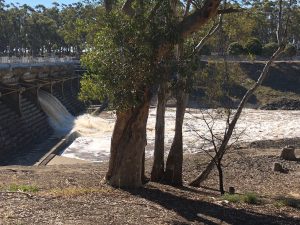
In freshwater systems, on-ground actions that improve connectivity, stabilise riverbanks, provide shelter and create diverse flow conditions support native fish populations. Actions may include improving riparian land, installing in-stream habitat such a woody snags, logs and rootballs, installing fish screens and improving connectivity for fish passage through installing fishways and removing barriers that restrict fish movement.
Projects to rebuild and enhance fish habitat in freshwater are being executed across the state. For example, as part of the Melton Reservoir Habitat Project led by OzFish Unlimited and the Melton Sportfishing Club, rusted cars are being removed from the water and replaced with timber fish hotels at Melton Reservoir. The works will support the reservoir’s native fish stocks.
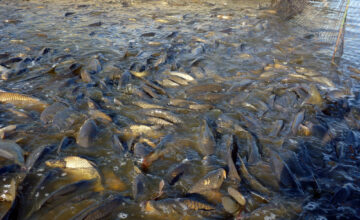
Near Mildura, the Mallee Catchment Management Authority partnered with the First People of the Millewa Mallee Aboriginal Corporation to address carp and habitat issues along the Sandilong Creek. Through the project, more than 140kg of carp was eradicated from the waterway and custom mesh screens were installed to stop the carp from returning to the creek.
While freshwater projects often aim to provide habitat for our popular recreational species such as Murray cod and golden perch, there are also projects that focus on endangered species such as Macquarie perch and southwest river blackfish.
Along the Ovens River, the Australian Trout Foundation and North East Catchment Management Authority worked in partnership through the Bridging Waters 2.0 project to improve river health and clearwater habitats for trout and Macquarie perch.
In the Merri River and Brucknell Creek, the Glenelg Hopkins Catchment Management Authority installed in-stream habitat to support populations of the endangered western Victorian blackfish and prepare for the reintroduction of the species into the upper reaches.
In estuaries, adding large timber structures, rock structures and restoring riparian vegetation increases habitat complexity and connectivity for species such as black bream, estuary perch, and Australian bass, boosting survival and recruitment in these critical nursery zones.
To support our marine fisheries, initiatives such as restoring living shellfish reefs, restoring vegetation, like seagrass and mangroves, and in‑bay habitat structures can enhance biodiversity, improve water quality, and provide hotspots for many of our favourite marine species such as snapper, calamari, and King George whiting, while also supporting broader health of the marine ecosystem.
For more than a decade, habitat hero Bob Pearce, from the Albert Park Yachting and Angling Club (APYAC), has been a driving force behind the restoration of shellfish reefs in Port Phillip. The latest reef project led by APYAC in Hobson’s Bay, Kayakers Reef, saw fish towers arranged on the bottom of the ocean and seeded with native oysters to help restore lost shellfish reefs. The structures attract marine life and popular recreational species such as snapper, whiting and calamari, resulting in better fishing opportunities. The living shellfish reefs also improve water quality, provide food and shelter for marine life, boost fish stocks and promote the growth of seagrass.
OzFish Unlimited are also restoring shellfish reefs near Mornington to boost habitat, improve water quality and marine biodiversity.
The Nature Conservancy are working to restore one of the bay’s most important ecosystems – golden kelp and micro algae forests – which has declined due to overgrazing by native sea urchins near the Jawbone Marine Park off Williamstown.
These projects have received funding via the $2.5-million Fish Habitat Improvement Fund and provided a boost to our booming fisheries. Healthy habitat in and around our waterways helps to maintain resilient fish communities, richer food webs, and delivers better fishing experiences across Victoria.
As the independent peak body for Victoria’s recreational fishing, VRFish continues to play a lead role in advocating for investment in fish habitat and promoting the role that Victorian recreational fishers can play in identifying areas that require attention and leading the implementation of habitat protection, restoration and enhancement efforts.
VRFish has been proudly representing Victoria’s recreational fishing for more than thirty years.
VRFish Election Priorities
As the peak body for recreational fishing in Victoria, VRFish advocate for recreational fishing interests.
To ensure recreational fishers priorities are strongly represented ahead of the upcoming Victorian State Election, VRFish launched our Election Priorities to advocate for better recreational fishing outcomes.
At the heart of the plan, VRFish will be advocating for better fishing experiences through five core areas – better fish, better access, better environment, better regulations and better future.
BETTER ENVIRONMENT
To safeguard the quality of our fisheries and fishing experiences, VRFish is advocating for:
- $2.5m fish habitat fund, for the delivery of marine and inland habitat restoration projects.
- Support for and implementation of carp control measures.
- Water Security: protect the recreational fishery on the Wimmera-Mallee pipeline by allocating recreational water for recreational fishing.
- Native Fish Recovery: broaden the 10 in 10 endangered fish species recovery program, with additional funding for research and monitoring.
VRFish is actively advocating to make fishing better in Victoria. This demonstrates the benefit of having a strong and independent peak body.
Please acknowledge VRFish, the Victorian Recreational Fishing Peak Body, as the author of this article and link to our website if distributing or re-using this article. Keep up-to-date on the latest Victorian recreational fishing news on our website.